- Joined
- Dec 12, 2009
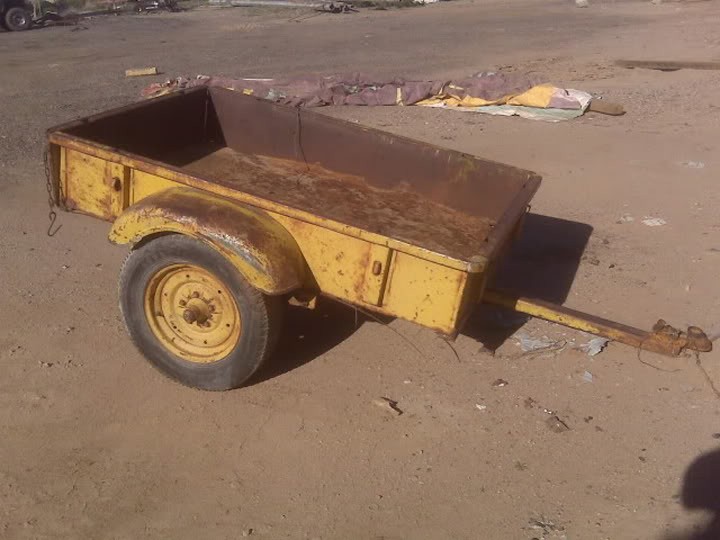
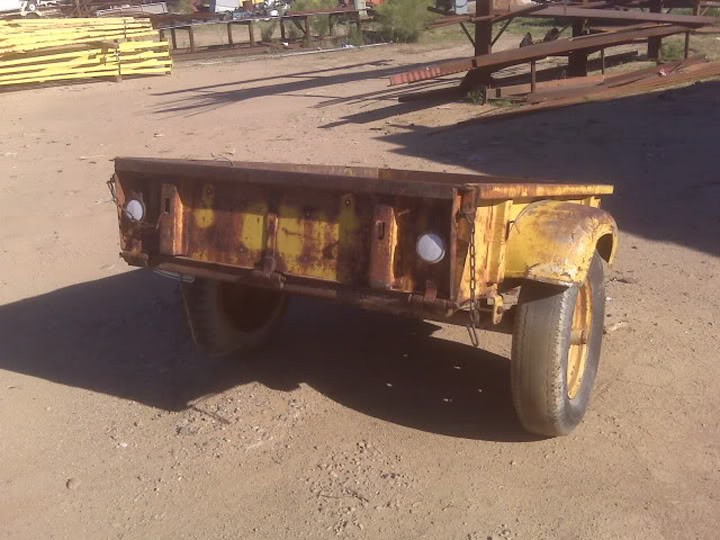
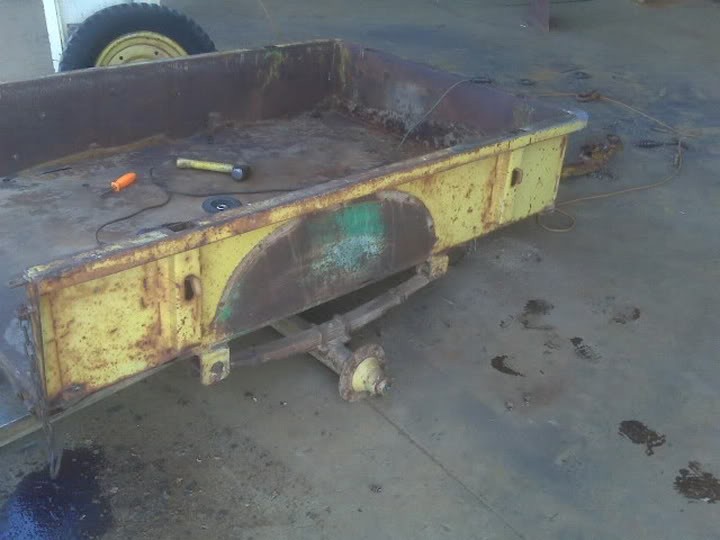
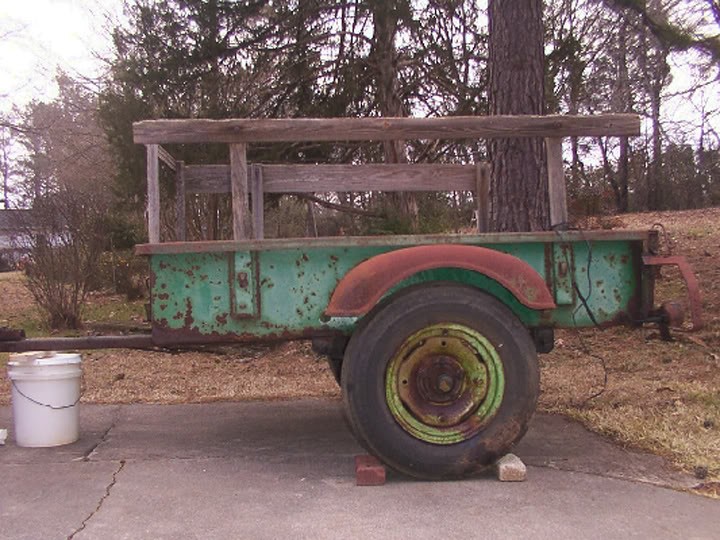
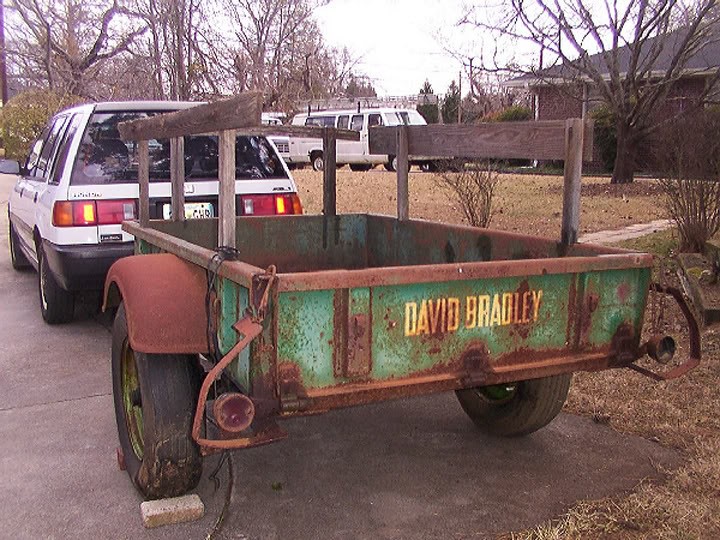
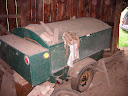
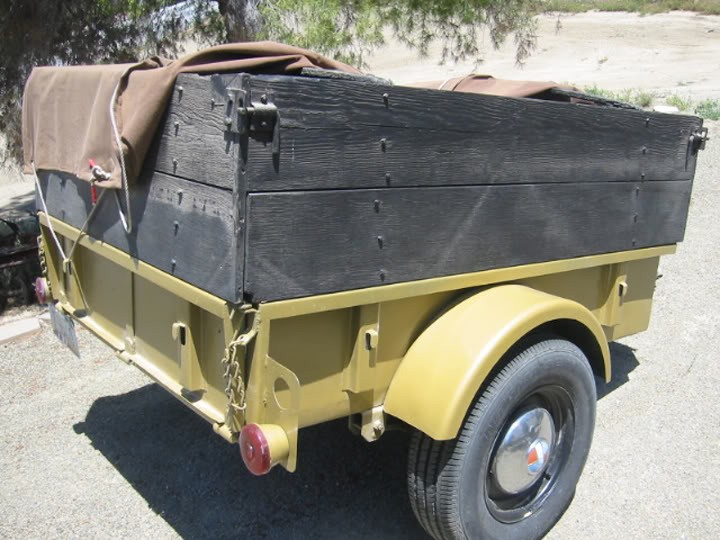
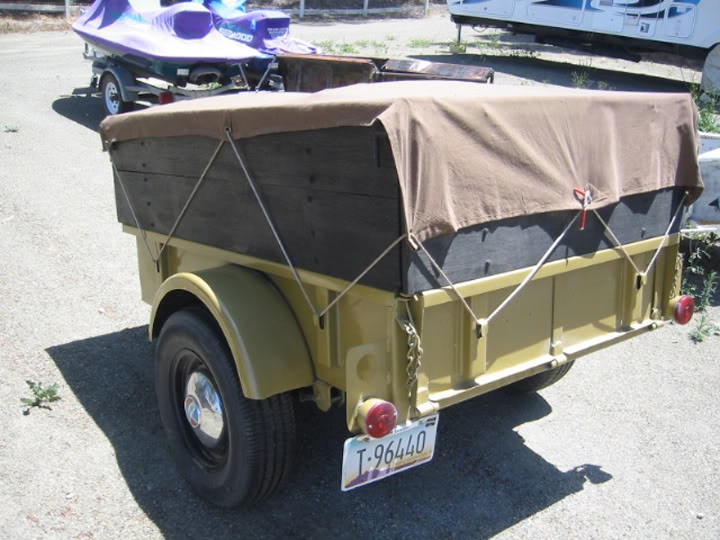
The trailer pictured below is owned by Greg M. (a.k.a. Farwest). As I told Greg, I certainly don't consider myself to be an expert on these trailers. I'm just trying to piece together their history from incomplete and often confusing bits of evidence. That said, here's what I observed from his photos, and my thoughts based on those observations.
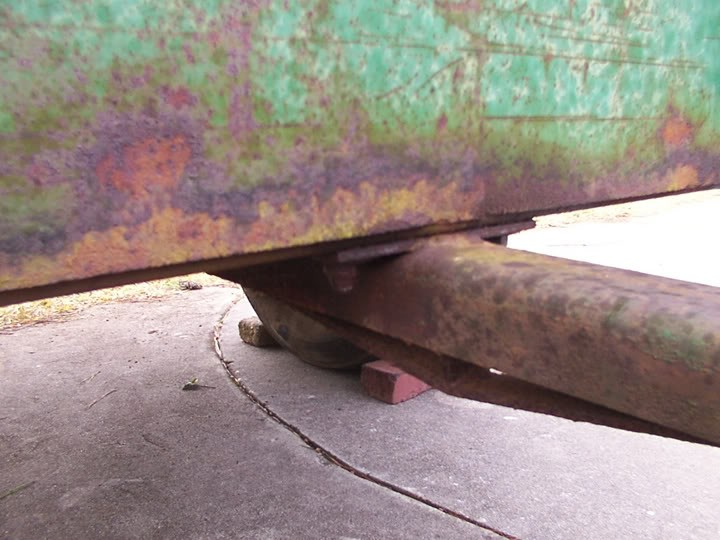
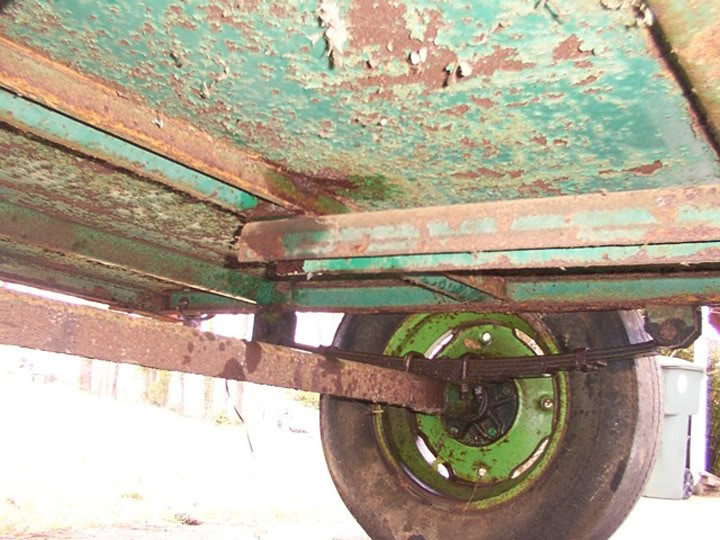
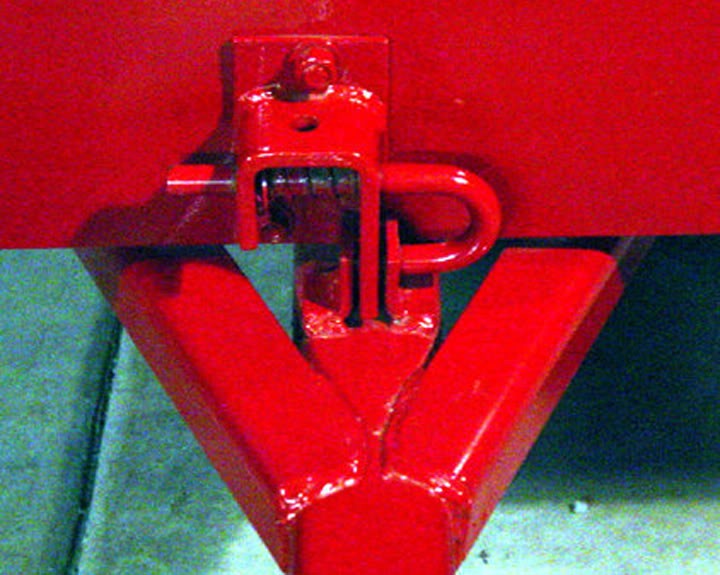
Like the Ben-Hur Model 22-46, this trailer has round military-style fenders, the early single-bolt type front tongue attachment (as opposed to the later two-bolt plate type attachment) and an early type axle (which I’ve previously described as a “round” axle, but understand is actually round on the bottom and flat on the top).
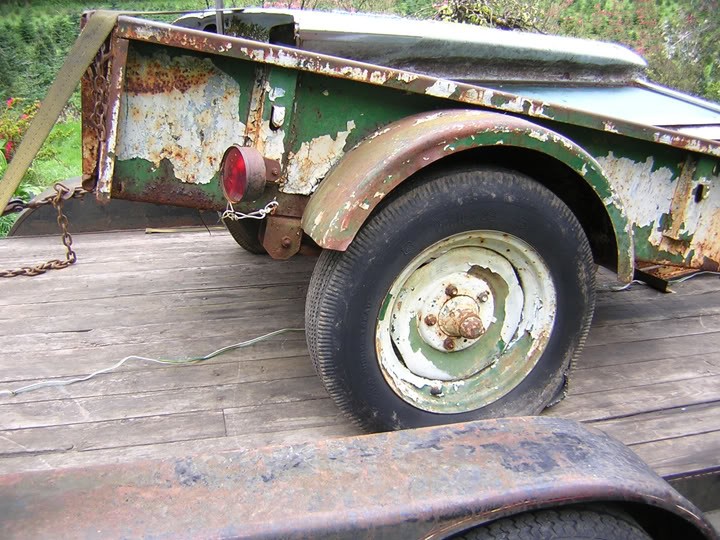
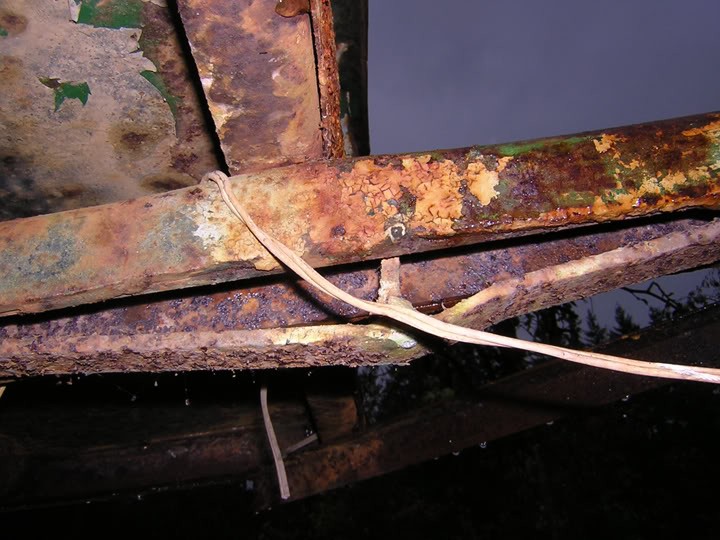
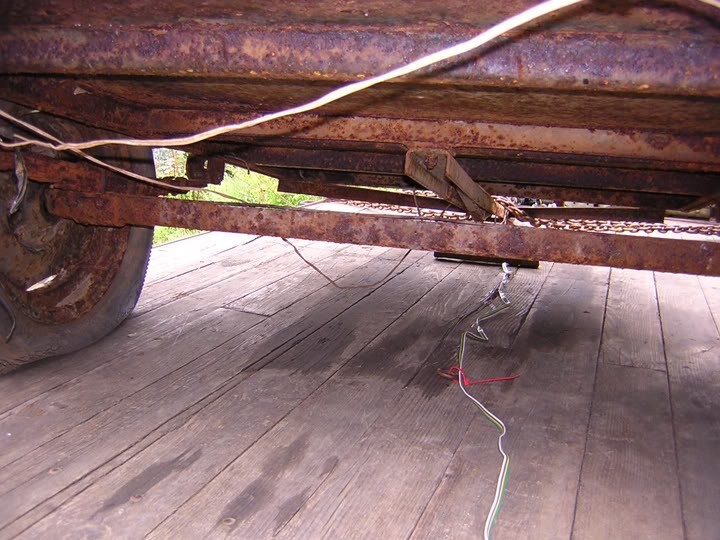
As a side note, a round-fender trailer with the rectangular section axle found on the later model trailers can be seen near the bottom of Page 1 of this thread - it's the previously green one shown after sandblasting and priming. The late axle on that trailer leads me to believe that Ben-Hur, which evidently stopped production of the original version of the trailer in 1947, was not the only manufacturer of the round fender models.
Unlike the Ben-Hur Model 22-46 and the 1947 David Bradley tailgates, which had long-backstrap hinges, this trailer has the later short-backstrap hinges:
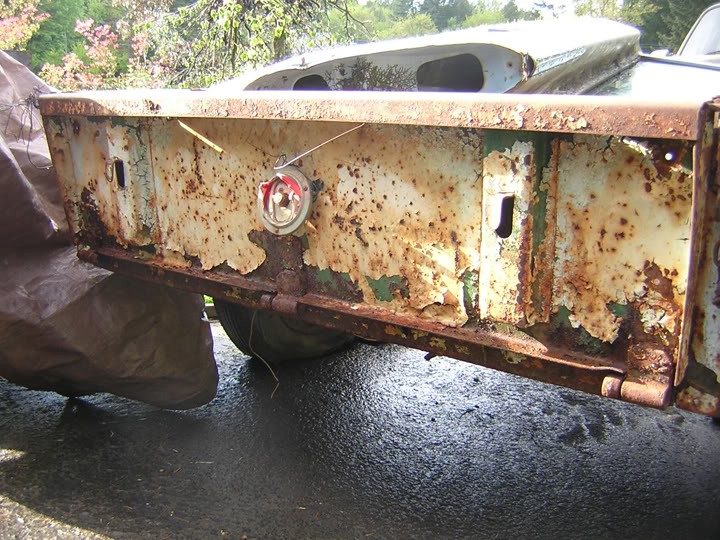
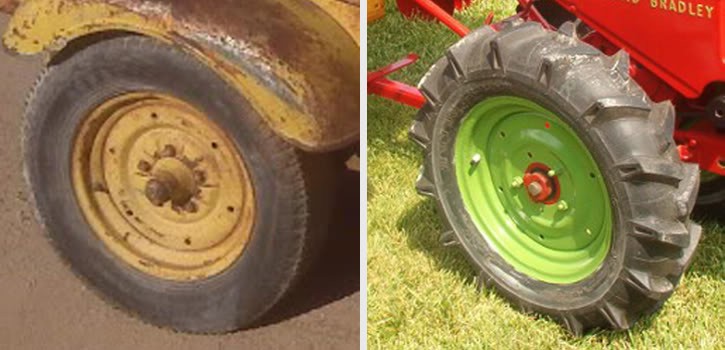
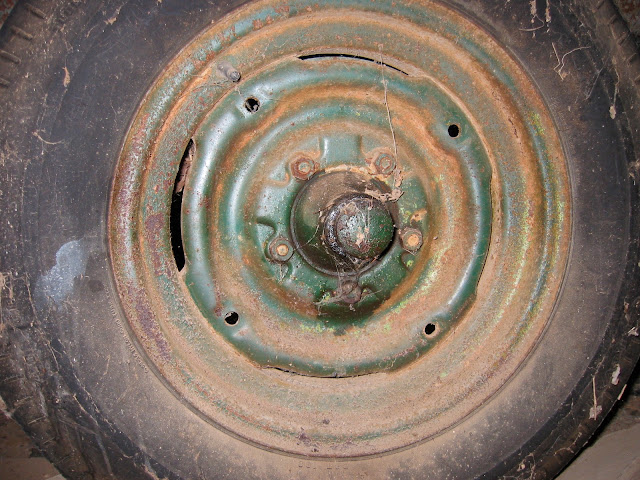
This type of hinge evidently came into use in either 1947 or 1948. I believe this general time frame for the change to the short-backstrap hinges is probably correct, because the wheels on this trailer are the same 16" wheels shown in the 1947 Ben Hur ad (below left) as well as in the 1947 Sears catalog (below center). Below at right is the wheel on Greg’s trailer:
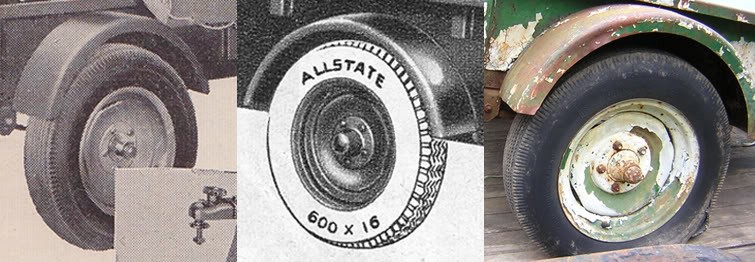
By late 1948 or early 1949, the wheels that came on the David Bradley branded trailers were David Bradley tractor wheels, which were completely different from those pictured above.
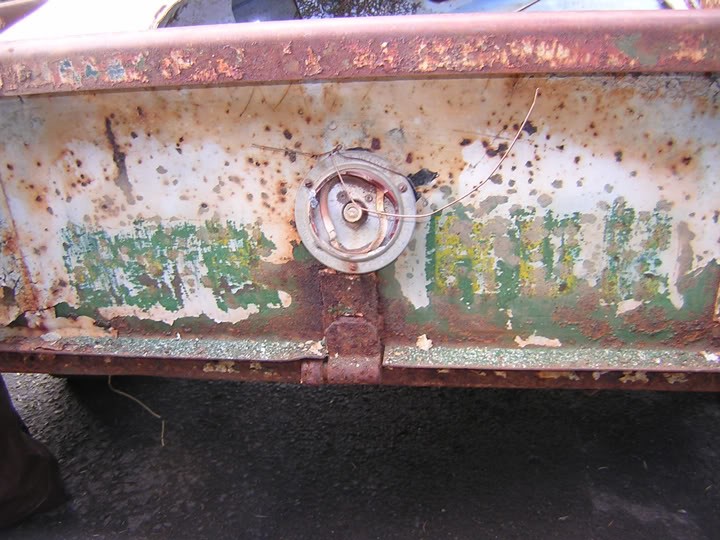
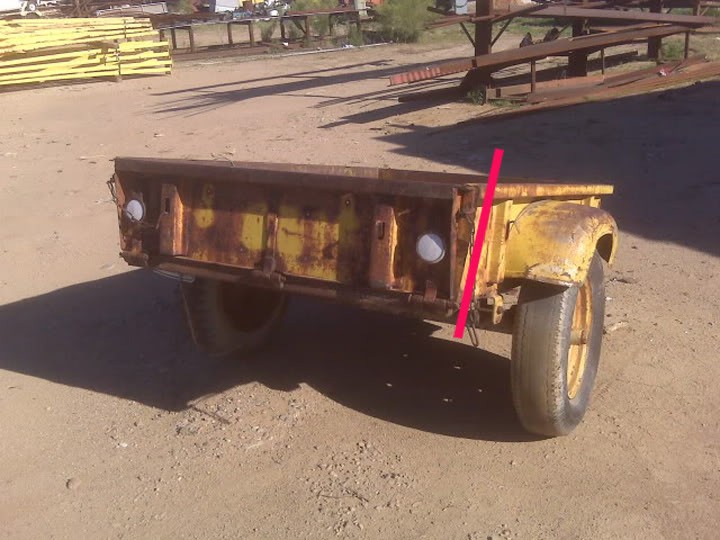
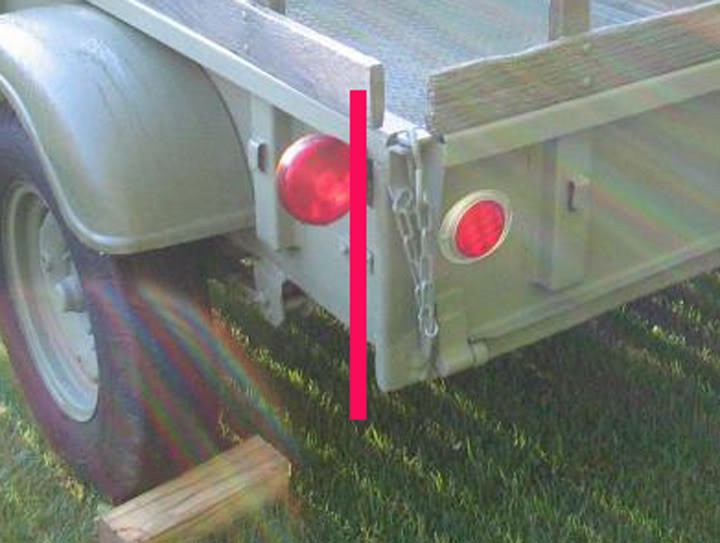
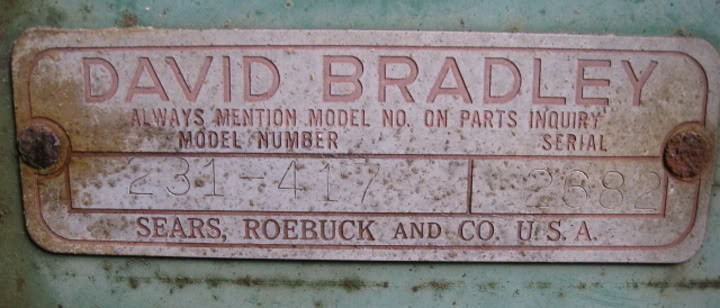
The position and shape of the data plate on this trailer can still be seen in the photo below, though the plate itself is gone. Interestingly, neither the shape nor the location of this data plate match those of either the David Bradley 231-417 or or Ben-Hur trailers I’ve seen to date:.
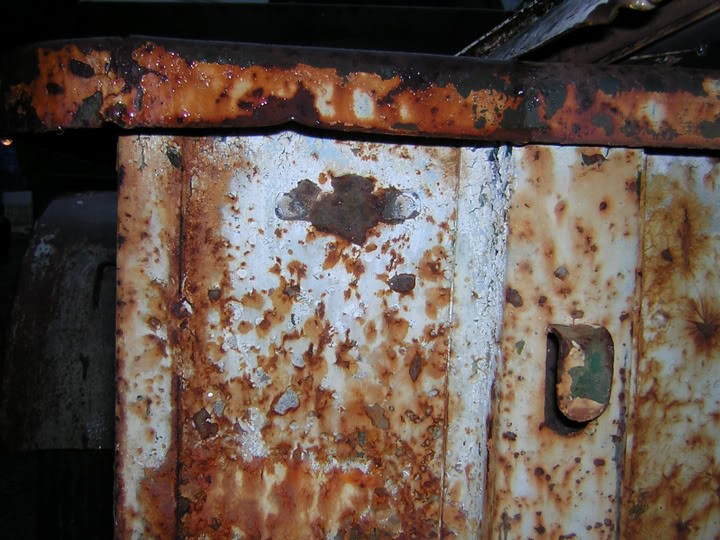
This could be another version of the Ben-Hur, I suppose - but these differences in the data plate location and shape lead me to wonder if Greg’s trailer may be an example of the same basic design that was produced and sold under the Dunbar Kapple name. As established earlier, Dunbar Kapple built the Model 231-417 David Bradley trailers for Sears.
Early on, I thought that Sears must have sold both the roadster and round fender models of the trailer. But later, when I saw the Sears Fall 1947 Farm Catalog - the earliest catalog that included the David Bradley trailer - I realized that it showed the trailer with roadster style fenders, not round fenders. This likewise turned out to be the case for each of the subsequent Sears catalogs I've seen. To my knowledge, no solid evidence has surfaced to date indicating that the round fender versions were ever sold by Sears (though the newspaper ad picturing the Ben-Hur Jiffy Camper on a David Bradley trailer does appear to show round fenders, the artwork in that ad was clearly traced directly from the earlier Ben-Hur advertisement).
However, a round fender trailer sold by Dunbar Kapple under their own name was described in the earlier post about the “Silver Tongued Devil” (recopied here from the first page of this thread):
Like the Ben-Hur Model 22-46, this trailer has round military-style fenders, the early single-bolt type front tongue attachment (as opposed to the later two-bolt plate type attachment) and an early type axle (which I’ve previously described as a “round” axle, but understand is actually round on the bottom and flat on the top).
As a side note, a round-fender trailer with the rectangular section axle found on the later model trailers can be seen near the bottom of Page 1 of this thread - it's the previously green one shown after sandblasting and priming. The late axle on that trailer leads me to believe that Ben-Hur, which evidently stopped production of the original version of the trailer in 1947, was not the only manufacturer of the round fender models.
Unlike the Ben-Hur Model 22-46 and the 1947 David Bradley tailgates, which had long-backstrap hinges, this trailer has the later short-backstrap hinges:
This type of hinge evidently came into use in either 1947 or 1948. I believe this general time frame for the change to the short-backstrap hinges is probably correct, because the wheels on this trailer are the same 16" wheels shown in the 1947 Ben Hur ad (below left) as well as in the 1947 Sears catalog (below center). Below at right is the wheel on Greg’s trailer:
By late 1948 or early 1949, the wheels that came on the David Bradley branded trailers were David Bradley tractor wheels, which were completely different from those pictured above.
The position and shape of the data plate on this trailer can still be seen in the photo below, though the plate itself is gone. Interestingly, neither the shape nor the location of this data plate match those of either the David Bradley 231-417 or or Ben-Hur trailers I’ve seen to date:.
This could be another version of the Ben-Hur, I suppose - but these differences in the data plate location and shape lead me to wonder if Greg’s trailer may be an example of the same basic design that was produced and sold under the Dunbar Kapple name. As established earlier, Dunbar Kapple built the Model 231-417 David Bradley trailers for Sears.
Early on, I thought that Sears must have sold both the roadster and round fender models of the trailer. But later, when I saw the Sears Fall 1947 Farm Catalog - the earliest catalog that included the David Bradley trailer - I realized that it showed the trailer with roadster style fenders, not round fenders. This likewise turned out to be the case for each of the subsequent Sears catalogs I've seen. To my knowledge, no solid evidence has surfaced to date indicating that the round fender versions were ever sold by Sears (though the newspaper ad picturing the Ben-Hur Jiffy Camper on a David Bradley trailer does appear to show round fenders, the artwork in that ad was clearly traced directly from the earlier Ben-Hur advertisement).
However, a round fender trailer sold by Dunbar Kapple under their own name was described in the earlier post about the “Silver Tongued Devil” (recopied here from the first page of this thread):
Dunbar Kapple Trailer Info Wanted
Today I saw a Dunbar Kapple M-100 look-alike. It wasn't (I don't think), a M-100 because the side rails stopped immediately at the top of the rounded fenders (it didn't have the extra flare on the top that M-100s or M-416s or M-101s have). I know it was a Dunbar Kapple because it still had the ID plate (sorry, I didn't get any other info from the data plate). My guess is a post-war civilian model. I googled for an hour trying to find one similar and can't find anything.
It was blue that I'm fairly certain was original. A drop down tailgate. No lights, except for what would be a license plate light that also looks original. It's spring-over, but no shocks and I don't think it ever had shocks. The hitch is a single 36" long bar with no triangulation, and I don't think it ever had any triangulation. The bed looked original with a diamond plate pattern. It had stake pockets for wood stakes. The bed was exactly 72" by 46". It was named the "Silver Tongued Devil" (which if I buy it, I will definitely try to keep the lettering).
I've been looking for a M-100 to pull behind my Jeep, and ran across this. I'm trying to decide if it will be worth picking up, even though it's shorter (in overall height) than a M-100, so it has less cargo capacity. It also needs some work, like a new pan due to a large hole. But otherwise it seemed to be in good shape.
If I pick it up this will be the start of the re-build thread...
If I’m correct, and Greg's trailer is a Dunbar Kapple branded trailer, then it would follow that the early Dunbar Kapple version shared the same wheels with the early David Bradley version of the trailer (as well as with the Ben-Hur Model 22-47). This theory could in turn explain the white round fender trailer shown in the first post of this thread, which clearly has David Bradley tractor wheels. Hopefully, a Dunbar Kapple trailer with an intact data plate will be “discovered” soon and someone can post photos of it - which will either corroborate or disprove this theory.Today I saw a Dunbar Kapple M-100 look-alike. It wasn't (I don't think), a M-100 because the side rails stopped immediately at the top of the rounded fenders (it didn't have the extra flare on the top that M-100s or M-416s or M-101s have). I know it was a Dunbar Kapple because it still had the ID plate (sorry, I didn't get any other info from the data plate). My guess is a post-war civilian model. I googled for an hour trying to find one similar and can't find anything.
It was blue that I'm fairly certain was original. A drop down tailgate. No lights, except for what would be a license plate light that also looks original. It's spring-over, but no shocks and I don't think it ever had shocks. The hitch is a single 36" long bar with no triangulation, and I don't think it ever had any triangulation. The bed looked original with a diamond plate pattern. It had stake pockets for wood stakes. The bed was exactly 72" by 46". It was named the "Silver Tongued Devil" (which if I buy it, I will definitely try to keep the lettering).
I've been looking for a M-100 to pull behind my Jeep, and ran across this. I'm trying to decide if it will be worth picking up, even though it's shorter (in overall height) than a M-100, so it has less cargo capacity. It also needs some work, like a new pan due to a large hole. But otherwise it seemed to be in good shape.
If I pick it up this will be the start of the re-build thread...
Last edited: